

Breakfast cereal are probably among the most commonly purchased and consumed breakfast foods. It’s an easy, convenient, readily available choice for breakfast and there are so many varieties to choose from. They can satisfy everyone’s taste and with so many different kinds, no need for parents to worry whether the kids will get bored of eating the same breakfast all the time.
But even though they provide the perfect solution for breakfast in terms of ease and convenience, they’re not actually the best choice in terms of nutrition. Let’s not forget that they’re highly processed foods, usually loaded with additives, and they may have a high content in fat, sugar and salt.
But the truth is we’re not always in the mood to prepare a healthy, nutritious breakfast with natural ingredients from scratch. Or we may just want an easy-to-make option that needs no preparation from time to time. Maybe you just love their crunchy taste in your milk or yogurt. After all, you eat perfectly healthy the rest of the day. Or maybe you are a parent, the kids kept asking for them and you didn’t want to refuse.
Totally fine! There is nothing wrong with choosing a less healthy option for any of our meals from time to time. But among the less healthy, what if you could choose the least unhealthy?
When it comes to processed and packaged foods, the golden rule for health-oriented consumers is this: Read the labels! And when you’re on the lookout for the best granola choices, these are the things you should pay attention to.
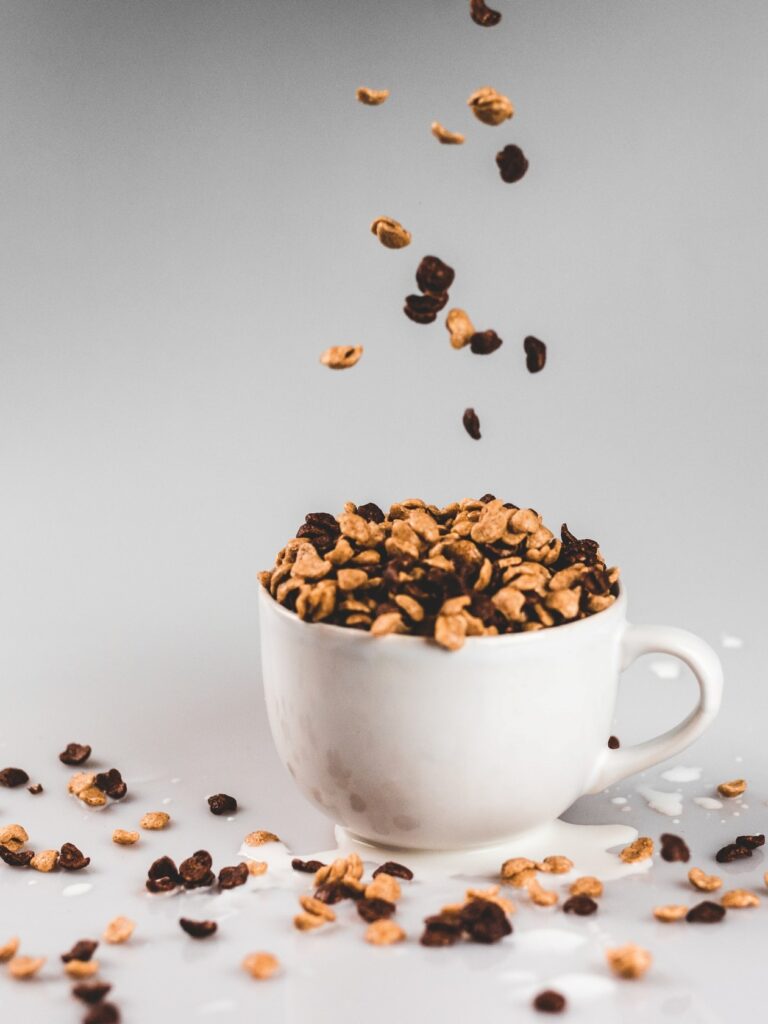
How to choose the best breakfast cereal
- First, look at the list of ingredients. (This is actually a good habit with all packaged foods that consist of multiple ingredients.) You’ll be surprised to discover cereal with lists that are 25 or 30 ingredients long! The shorter the list, the better. Especially if most of the ingredients are long, unknown, difficult-to-pronounce words, you’d better put it back on the self.
- Check for sugars. Most breakfast cereal are loaded with more than one types of sugar. Search among the ingredients’ list for sugar, glucose syrup, molasses, honey, partially inverted brown sugar syrup, fructose, dextrose, high fructose corn syrup, etc. Also, check the sugar content at the nutrition facts label. It ranges from 1 gram per serving up to 27 or 28 grams per serving! You don’t want to start your day with such a sudden spike in your blood sugar and insulin levels. Simple corn flakes usually have one of the lowest sugar contents, whereas the ones with chocolate are usually among those with the highest sugar content.
- Prefer wholegrain cereals. Don’t just pick the first whole-grain label that catches your eye. Check the ingredients again and also the fiber content in the nutrition facts label. Wholegrain products are rich in fiber. Breakfast cereal content ranges from about half a gram per serving to 4 or 5 grams per serving. There are also products that are enriched with fiber and are intended especially for raising the fiber content in one’s diet. Those cereal could reach the amount of 17 grams per serving! If you’re not used to high-fiber foods, you should be cautious with them and eat them in small amounts at first because a sudden, high raise in the fiber content of your diet could lead to unwanted gastrointestinal symptoms like bloating or diarrhea.
- Check the fat content. This ranges from 1 to 25% with chocolate cereal being at the higher end of this range. Plus, they usually have a higher saturated fat content. Pick a product that is low-fat, has little or no saturated fat and no trans fat.
- Check the sodium content. While doing my research for this article, I was surprised to find cereal with as much as 1 gram of sodium per serving! And yes, you may have guessed, there was added salt in the ingredients’ list. And it was actually a product marketed towards children.
- Most breakfast cereal are fortified foods, which mean they contain added vitamins and minerals. Apart from their presence in the nutrition facts label, those nutrients should also be listed in the ingredients’ list. That’s how we know they’re fortified foods. Pick one that contains lots of added nutrients, or, if you are familiar with your own needs, choose accordingly.
- Check for GMOs (Genetically Modified Organisms). Corn is among the most widely used genetically modified crops. In many countries, GMO labeling is mandatory.
- If you have allergies or if you have celiac disease, check for allergens and gluten. They are usually highlighted and sometimes they are printed in bold.
- Lastly, you can check the protein content. This is not something I usually insist on because granola is usually eaten with milk or yogurt which are both very good sources of protein. But if you want the extra benefit of added protein, choose a product with at least 7 or 8% of protein.
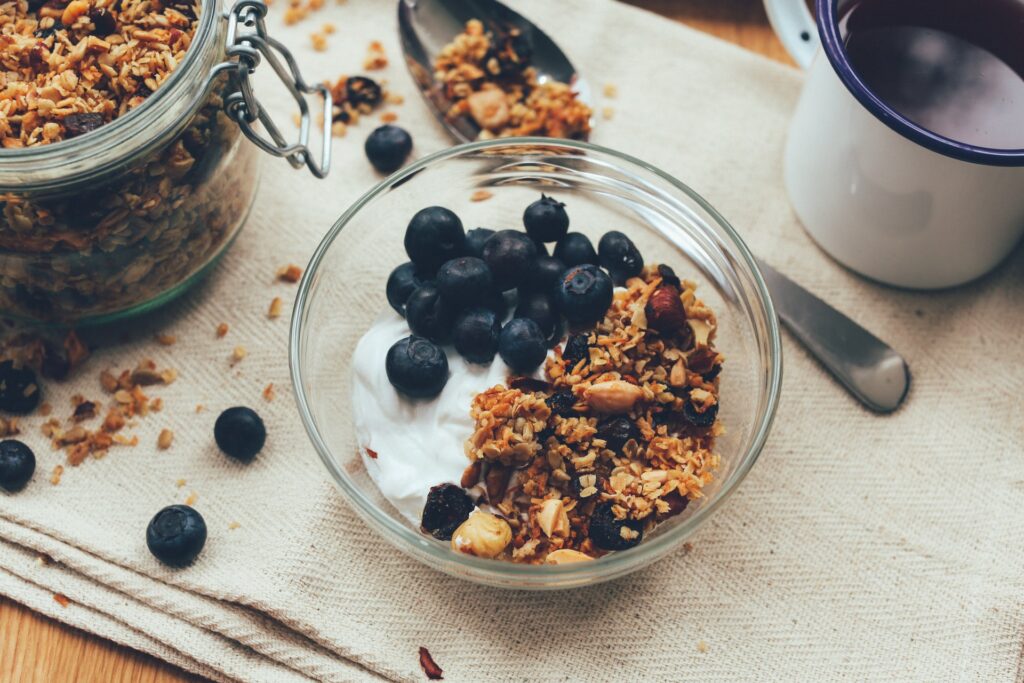
All the above advice can also be used when purchasing packaged granola, muesli and also cereal or granola bars. Those bars usually contain even bigger amounts of sugar and more additives like stabilizers and glazing agents in order to keep their shape and texture.
Make your own homemade granola
Have you tried making your own homemade granola? It may be the healthiest way to enjoy some kind of cereal for your breakfast. You can use oats, quinoa, wheat or other grains, add your favorite nuts, dried or fresh fruit and spices and experiment with different combinations and tastes. You can start by trying this recipe:

Bottom line
Breakfast cereal, granola, muesli and cereal bars are highly processed foods, with high sugar, fat and sodium content that should better be avoided. If you really want to buy them, make sure you read the nutrition labels and choose the least unhealthy one with the best nutritional benefits. Making your own homemade breakfast cereal, using natural ingredients is always the best choice.


